History

Time is still alive here

There are places where history is preserved in books. And there are places where it is still part of the landscape.

The Valle de Ricote is one of the latter.

Here, history is not found only in churches, castles and ancient documents. It is present in the irrigation channels which still carry water to the fruit trees and vegetables, in the paths which have crossed the valley for centuries and in a way of life which still carries echoes of those who inhabited these lands long before us.

To understand the Valle de Ricote is to understand how water, the cultures that succeeded one another in this territory and the passage of time shaped one of the most singular landscapes in the Región de Murcia.

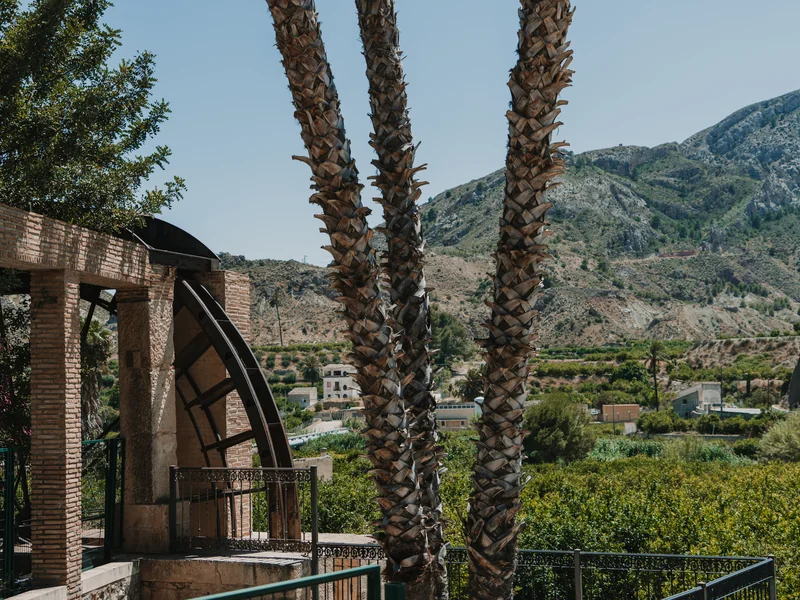
Waterwheel of the Conde de Villafelices in Ulea, Valle de Ricote
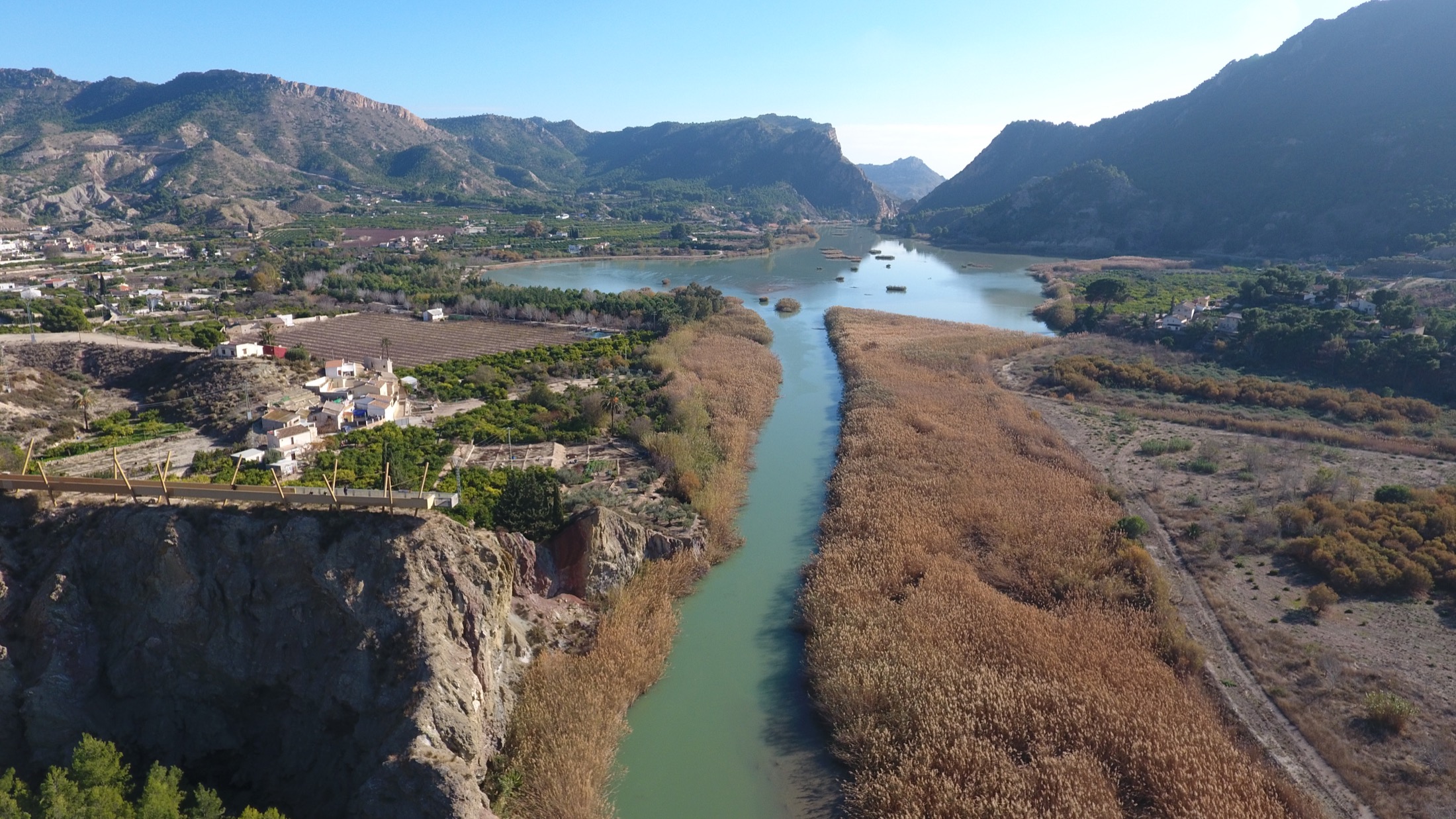
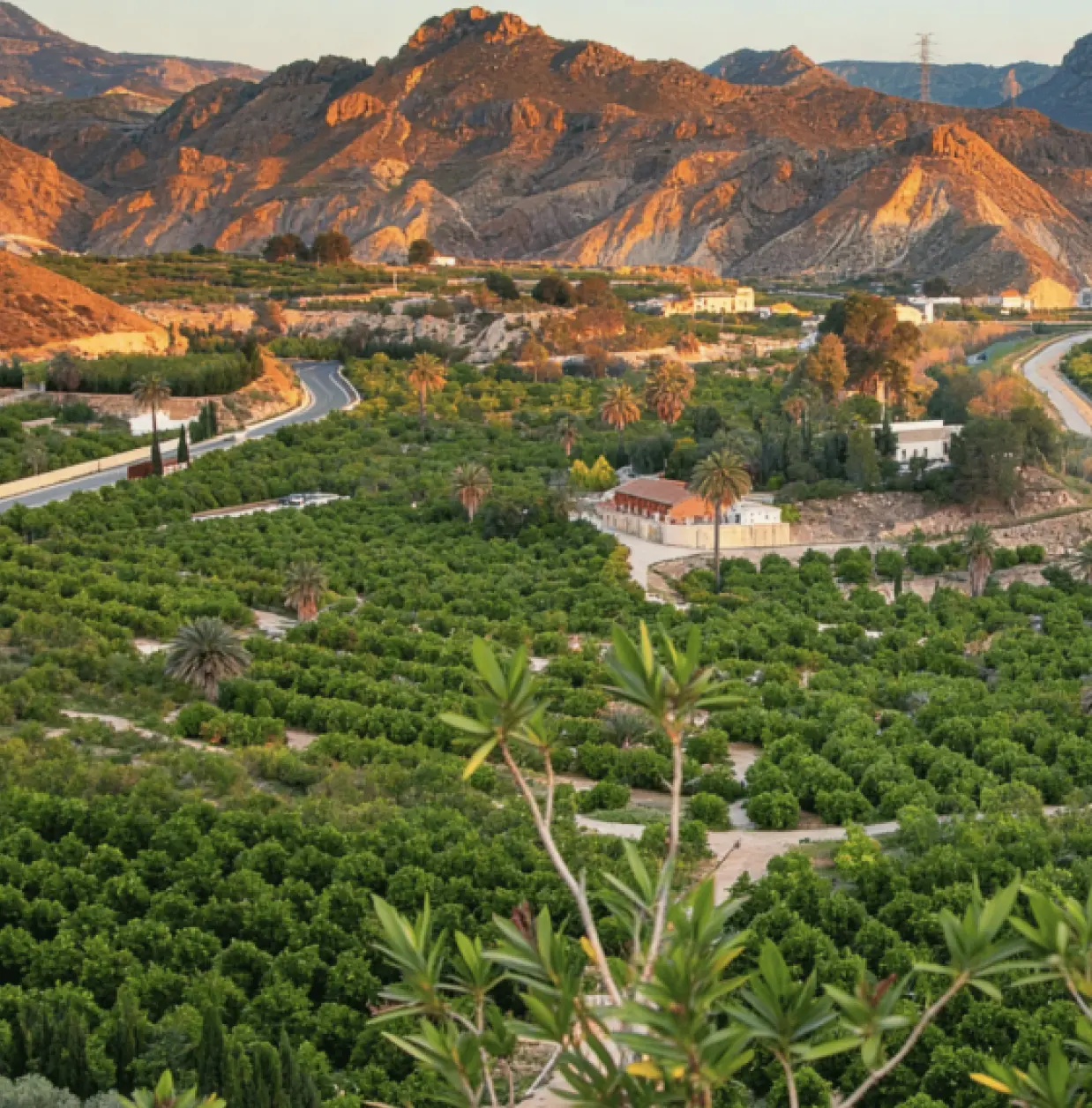
Aerial view of the Valle de Ricote shaped by the River Segura

An oasis shaped by water

Long before the current municipalities of Ricote, Ojós, Ulea and Villanueva del Río Segura existed, the River Segura was already defining the heart of this territory.

Surrounded by mountain ranges and arid landscapes, the valley became a natural oasis where water favoured the development of agriculture and the settlement of the first human communities. For centuries, entire generations learned to harness this resource through irrigation systems that transformed the territory and gave rise to the traditional “huerta” farming which gives the landscape its character today.

Irrigation ditches, weirs, waterwheels, pools and cisterns began to form part of a complex hydraulic system that transformed the valley into a fertile, productive land, capable of sustaining a way of life deeply rooted in the cycles of nature.

Water did not merely enable the land to be cultivated. It also shaped daily life.

The legacy of al-Ándalus

The al-Ándalus period profoundly marked the Slow identity of the Valle de Ricote.

For centuries, this territory formed part of a complex network of agricultural settlements which perfected water management systems and consolidated the model of traditional huerta farmland that still defines the area today. Much of the current water infrastructure dates back to that time, as does most of the traditional way in which the land is divided.

The influence of al-Ándalus can still be seen in the agricultural landscapes, in the structure of the irrigation channels, in certain place names and in the close relationship between humanity and the environment that characterizes the valley.

Huerta farmland and agricultural landscape of the Valle de Ricote, the legacy of al-Ándalus
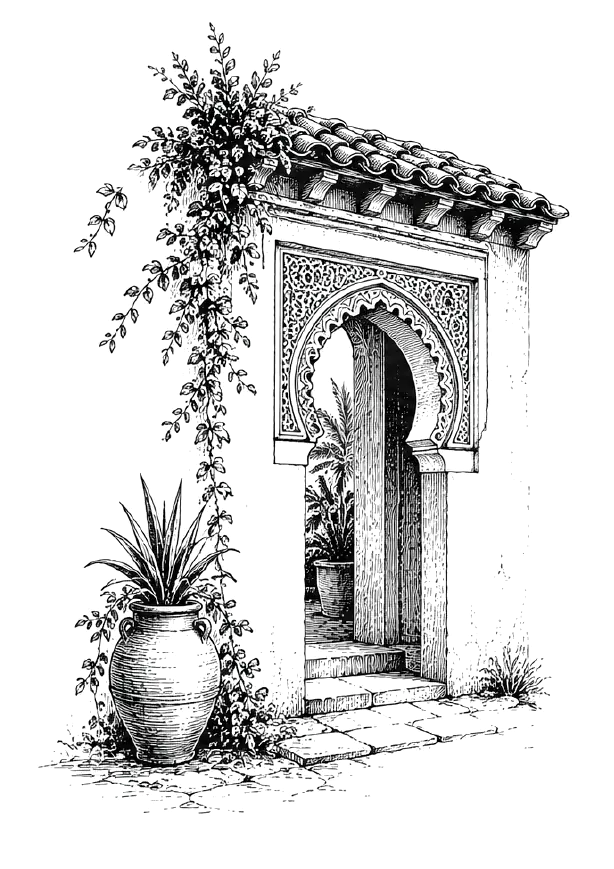
Illustration of the Moorish legacy of the Valle de Ricote

The last Moorish enclave
in the Levante

Few episodes better explain the singular nature of the Valle de Ricote than the history of its Moorish communities.

After the Castilian conquest, communities of Moorish origin continued to inhabit these lands for generations. While in other places their presence gradually disappeared, in the Valle de Ricote they managed to preserve their identity, their agricultural know-how and many of their ways of life for far longer.

For this reason, this territory is known as the last Moorish enclave in the Levante.

The expulsion decreed at the beginning of the 17th century brought about a profound demographic, social and economic transformation for the area. Many villages lost a significant proportion of their population, and a complex process of repopulation began that changed the history of the valley forever.

Even so, much of the Moorish legacy survived.

It survived in the irrigation systems. In the farmland. In the paths. And in the collective memory of its villages.

Traditional huerta farmland as a way of life

Over the centuries, the Valle de Ricote continued to grow around water and agriculture. The traditional fruit trees consolidated their position as the greatest living heritage of the territory. Lemon trees, orange trees, olive trees, fig trees and small family plots shaped a unique cultural landscape where nature and human activity evolved inseparably.

These “huertas” were not just an economic activity. They were a way of understanding the world.

The pace of work, social relationships, traditions and much of the local identity took shape around this landscape, which remains to this day.

That is why, when you travel through the Valle de Ricote, you are not merely looking at an agricultural landscape. You are witnessing a history that is still being written.

Orange blossom in the huerta farmland of the Valle de Ricote
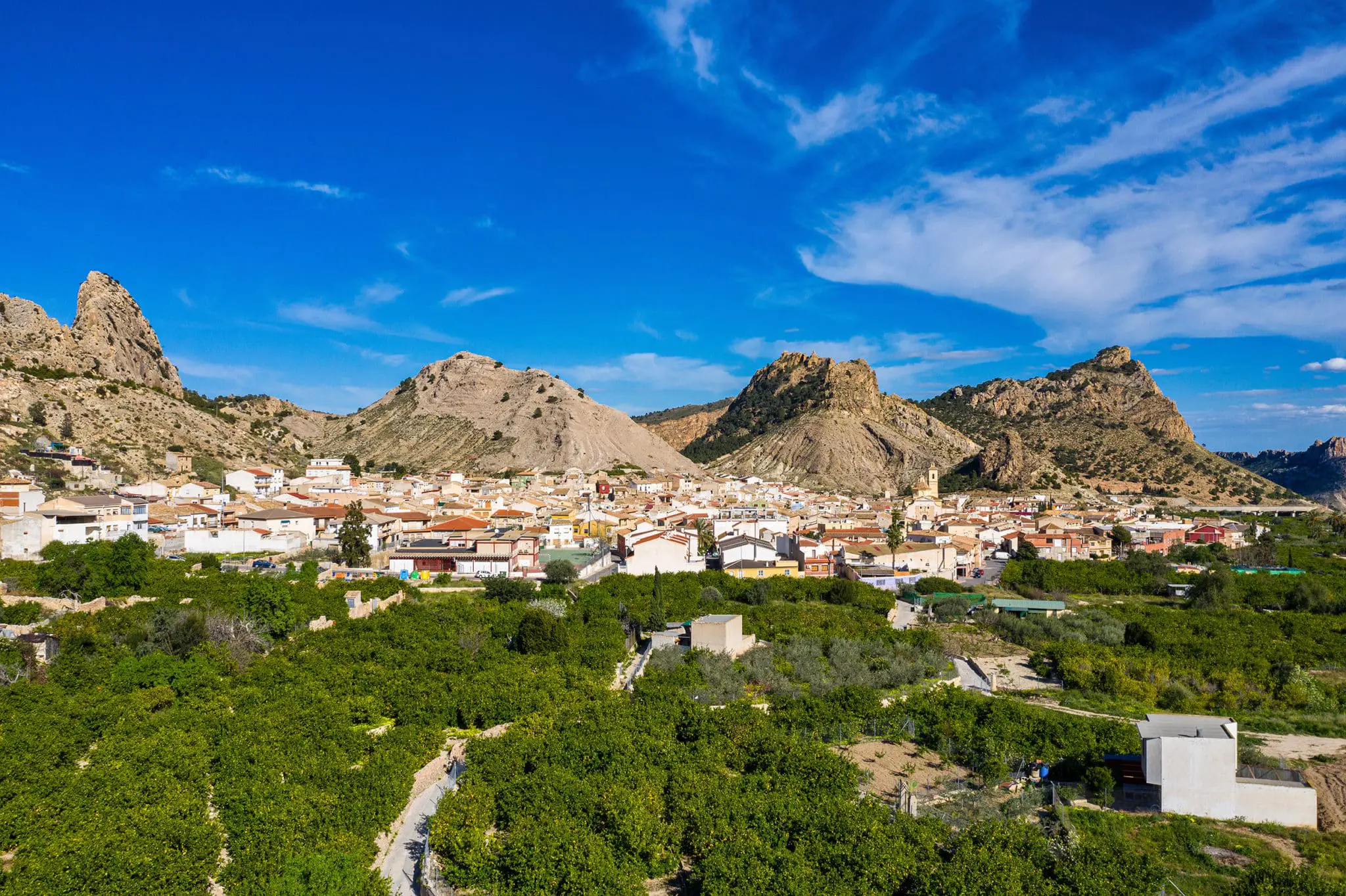
Landscape of Ricote, Valle de Ricote

A landscape that tells stories

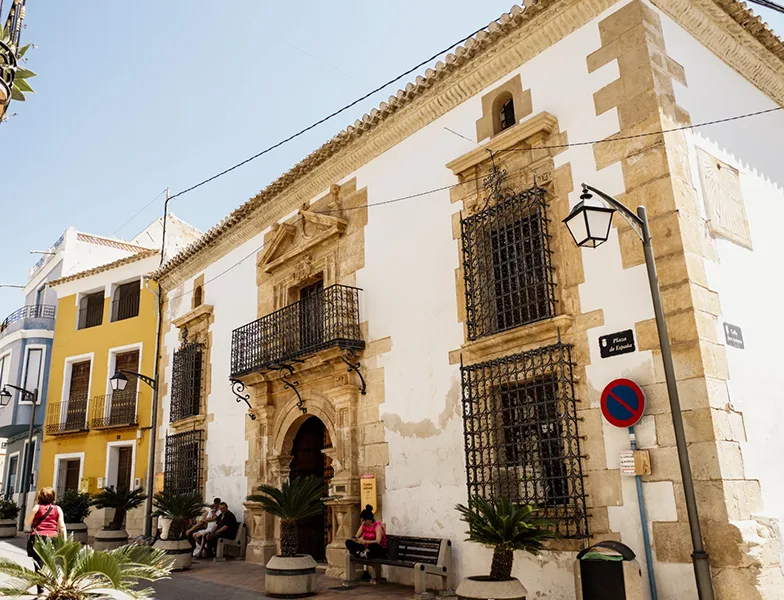
Castles, churches, small chapels, manor houses, mills, water wheels, wash houses, historic trails and viewpoints form part of a territory where every element helps to understand the past.

The castle of Ricote recalls the strategic importance of the valley. The irrigation ditches speak of centuries of hydraulic engineering. The manor houses evoke the history of the families who drove the agricultural and economic development of the area.

The traditional paths and trails still bear the footprints of those who have travelled in these lands for generations.

It is all part of the same story. The story of an inhabited landscape.

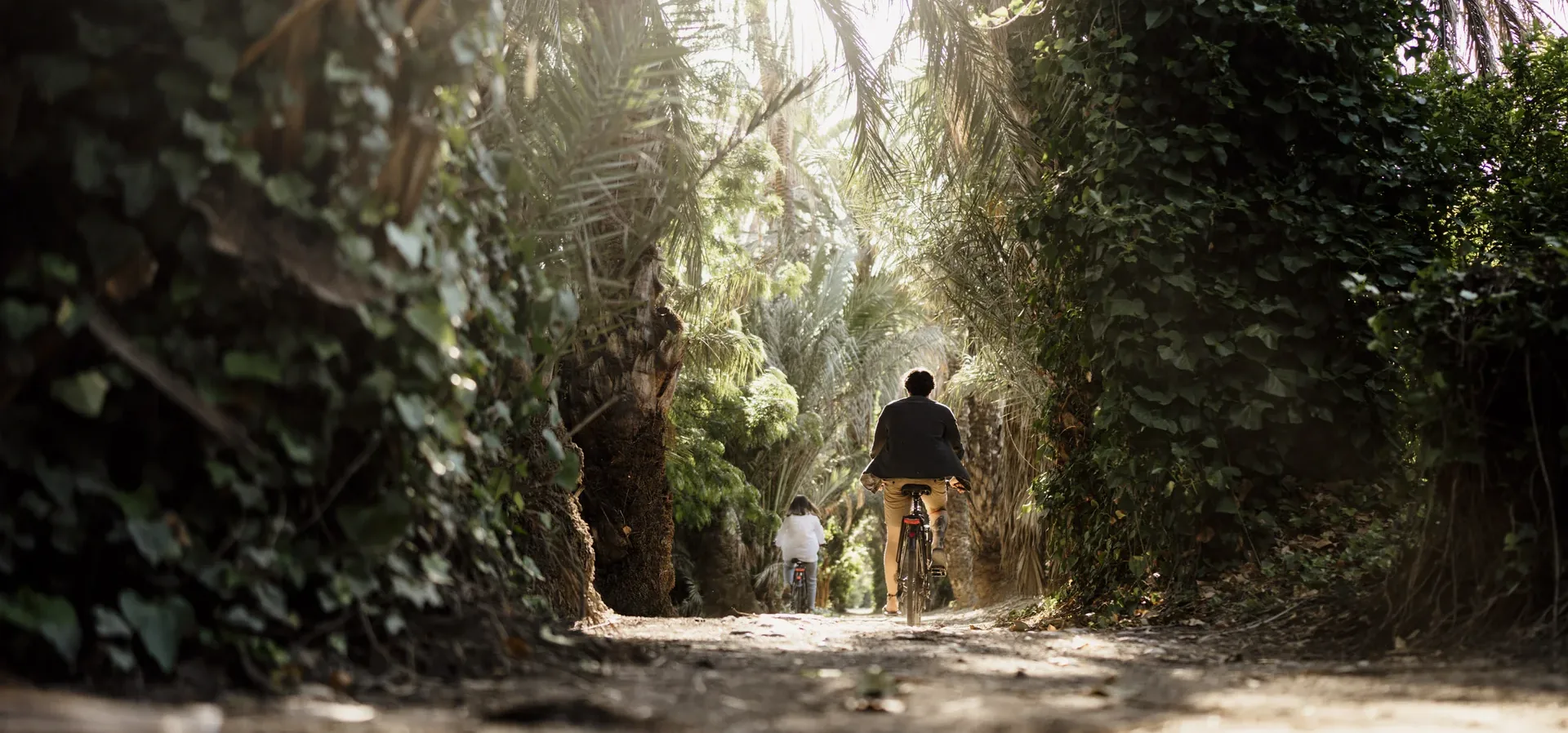
Bike ride through the Valle de Ricote

A Different Pace

Today the Valle de Ricote is still a different place.

A territory where water continues to set the rhythm of life, where the fruit trees keep a centuries-old tradition alive and where cultural heritage is naturally integrated into the landscape.

That’s why visiting the valley is much more than discovering a destination. It is approaching a different way of understanding time. A less hurried way. A more authentic way.

A way which is more connected to the land, its people and to the memory of a territory that has preserved its essence over the centuries.